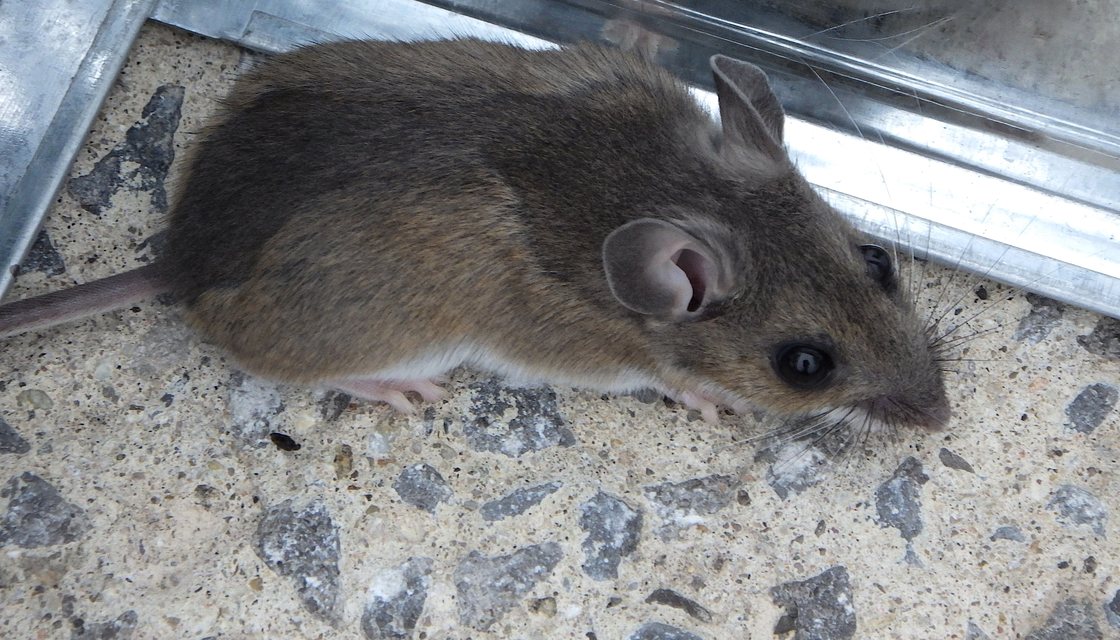
The first hard cold snap sends them looking for warmth. Older fieldstone basements make it easy.
It's the temperature, not the mess
House mice live outside all summer without bothering anyone. When Michigan nights start dropping into the thirties, they follow warmth, and the nearest warm cavity is a house. This is why a spotless kitchen still gets mice in October. Cleanliness affects how long they stay, not whether they try.
In Battle Creek the housing stock does the rest. Fieldstone and block basements with degraded mortar, sill plates that shifted decades ago, and utility penetrations nobody ever sealed are all a mouse needs.
How small a gap is enough
A house mouse can pass through a gap about the diameter of a pencil, roughly a quarter inch. A rat needs about the size of a quarter. A young mouse gets through less. That is why exclusion has to be thorough rather than approximate, and why 'I sealed the big holes' rarely ends the problem.
Common routes: mortar gaps in a stone or block foundation, the joint where the sill plate meets the foundation, gaps around water and gas lines, electrical conduit, dryer vents, garage door corners with worn seals, crawl space vents, and basement window frames that no longer sit square.
Why one mouse in October becomes many by February
A heated wall void is a breeding environment. Outdoors, mouse reproduction slows sharply in winter. Indoors, it does not. A pair that gets in during the first cold week can produce several litters before spring, and the young mature in a matter of weeks.
Gnawed wiring is a fire risk. Droppings and urine foul insulation and contaminate stored food and surfaces. Mice can carry pathogens, and their droppings and dander aggravate asthma. The problem does not hold steady, it compounds.
What actually works
Trapping plus exclusion. Snap traps set on the runways mice actually use, along walls and behind appliances, not scattered in the middle of a room. Then every entry point sealed with rodent-proof material: mortar and mesh at the foundation, sealed penetrations, corrected garage seals, screened vents.
Scattered bait is a common mistake. A poisoned mouse frequently dies inside a wall or under insulation, and the odor lasts for weeks. It also does nothing to stop the next mouse from following the same route in.
Do it before the cold
Exclusion done in late summer beats exclusion done in December, when the mice are already inside and every warm evening pushes more in. Pair it with the housekeeping: pet food and birdseed into sealed containers, trash secured, firewood and clutter off the foundation, vegetation trimmed back from the walls.
If you are already hearing them in the walls, an experienced local exterminator can trap, seal, and confirm the activity stopped rather than just slowed.
Call and connect with an experienced local exterminator.