They mass on sunny south walls in October, then spend the winter in your wall voids. The exterior treatment has a deadline.
What you're looking at
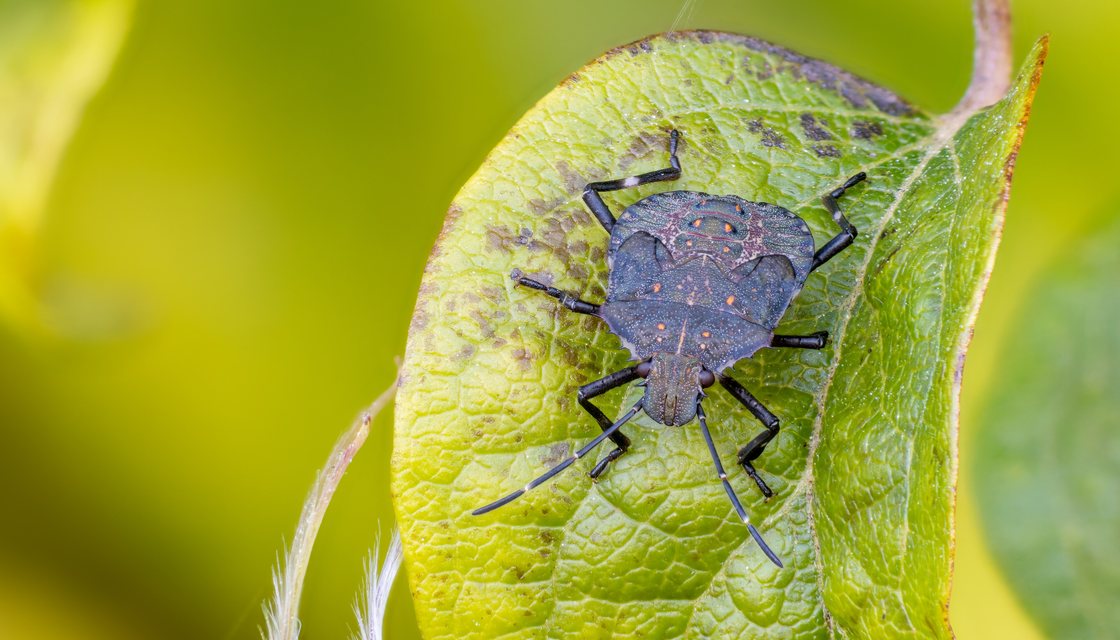
Four insects show up together on Michigan walls in fall. Boxelder bugs are black with red-orange lines, coming off boxelder, maple, and ash. Brown marmorated stink bugs are the shield-shaped brown ones from gardens, fruit trees, and field edges. Multicolored Asian lady beetles look like ladybugs and come off soybean fields and wooded edges. Cluster flies are the slow, sluggish flies that develop in earthworms in the soil around the house.
None of them bite. None of them breed indoors. None of them damage the structure. They just want a warm cavity to sit out a Michigan winter, and your walls qualify.
Why the south wall
They find your house by following heat. On warm afternoons in late September and October, the low sun loads up south and west-facing walls, and the insects gather there by the hundreds before working their way in.
Their entrances are unremarkable: the seam under vinyl siding, soffit and gable vents, ridge vents, gaps around window and door frames, and the holes where cable, gas, and electrical lines pass through the wall.
Why spraying indoors is a waste
By the time you see them inside, they are already overwintering in the wall void or attic. Spraying the wall interior barely touches them, and dead insects accumulating inside a wall become food for carpet beetles, which is a new problem you did not have.
Vacuum the ones that wander into the living space, ideally with a shop vacuum so the odor does not end up in your household vacuum. Do not crush them: stink bugs and lady beetles both release an unpleasant smell, and lady beetles can leave a yellowish stain on light surfaces.
The work that matters happens outside
Exclusion is the durable half and it pays back every year. Seal siding gaps and utility penetrations. Screen soffit, gable, and ridge vents. Repair damaged window screens. Add or fix door sweeps. Caulk around window and door frames.
The other half is the exterior residual treatment on the sunny walls, eaves, and around the openings, and it has a deadline. Applied in late summer to early fall, before the insects mass, it intercepts them on the way in. Applied in November, after they have settled into the wall void, it does much less.
Expect a spring encore
Every warm spell through winter, and reliably in spring, some of the overwintering insects wake up and blunder inward toward the light instead of back outside. That does not mean the fall treatment failed. It means the ones already inside the wall are doing what they always do.
The following autumn, with the openings sealed and the exterior treated on time, the numbers drop sharply. A local pro who watches the Michigan calendar puts it down in the right week.
Call and connect with an experienced local exterminator.