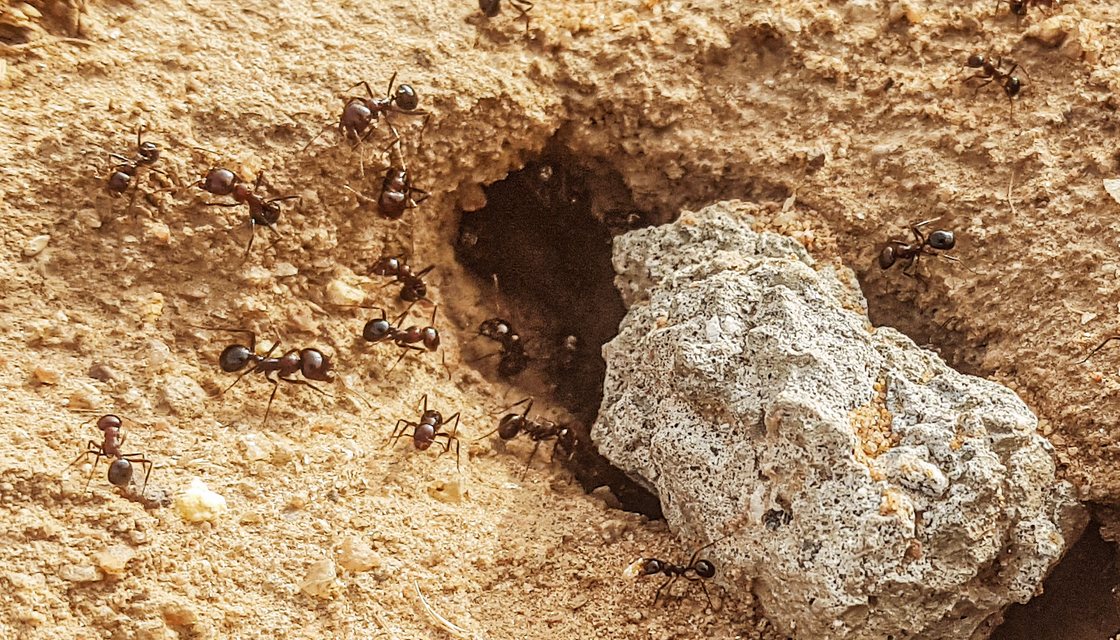
They don't eat wood, they hollow it out, and they start wherever a gutter, a roof, or a sill has stayed wet.
A moisture problem that walks
Carpenter ants do not consume wood. They excavate it, carving smooth, clean galleries to nest in and pushing the shavings out. What they need is wood that water has already softened, because sound, dry lumber is hard work.
In Battle Creek that means a sill or header under a gutter that overflows every storm, framing behind a slow roof leak, a deck ledger, a porch post standing on damp ground, a window sill that has gone spongy, or the rim joist above a wet basement wall. Find the water and you have usually found the ants.
Parent nests and satellites
The main colony is often outdoors, in a stump, a dead limb, a landscape timber, or a woodpile stacked against the house. From there the colony runs satellite nests inside the structure, and those satellites are what you notice.
This is why treating only what you see indoors leaves the problem in place. The parent colony keeps sending workers, and a fresh satellite establishes somewhere else in the same wet wood.
The signs
Coarse sawdust piles, sometimes containing insect body parts, below a baseboard, a window frame, or a sill. A faint rustling or crinkling sound inside a wall on a quiet night. Large winged ants indoors in spring, which indicates a mature colony in or against the structure rather than a visitor. Workers moving along a trail after dark.
Damage is slow compared to termites, but it accumulates over years, and it concentrates in the structural wood that was already compromised by water.
Why the spray can loses
A repellent aerosol kills the workers you can see. The colony continues, and repellents can actually push a colony to split into additional satellite nests, which spreads the problem across the structure.
The professional approach uses non-repellent products the foragers carry back and share, targeted void treatment where a wall or a sill is involved, and treatment of the parent nest outdoors once it is located.
Then fix the water
Clean and repair the gutters and extend the downspouts. Correct the roof leak. Replace the wood that has gone soft. Remove wood-to-soil contact: porch posts, deck ledgers, landscape timbers. Move the firewood off the house. Cut limbs back from the roof so they do not deliver ants to the eaves or hold water against the wall.
Treat the ants and skip the water and you will be treating them again. An experienced local exterminator will point at the gutter before pointing at the products.
Call and connect with an experienced local exterminator.