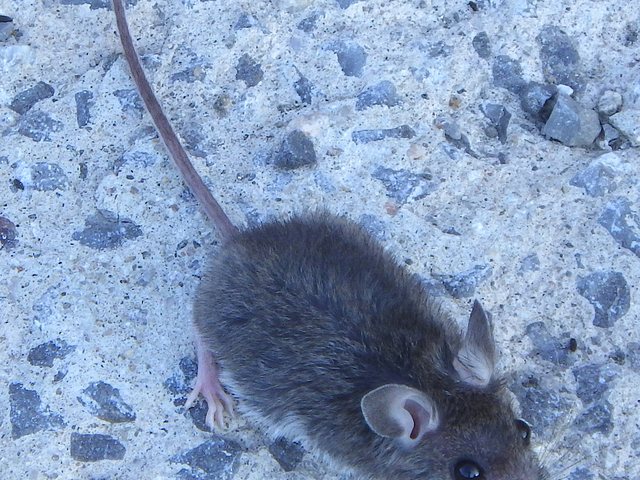
Rodent control in Battle Creek, MI is mostly a house mouse problem, and it runs on the Michigan calendar. The first hard cold snap in fall pushes mice off the fields and out of the leaf litter and straight into basements, garages, wall voids, and attics. Battle Creek's older housing stock makes it easy: fieldstone and block foundations with mortar gaps, wood sills that have shifted, and utility penetrations nobody ever sealed. Norway rats work the alleys, dumpster pads, and the grain and food-processing corridor. Mice gnaw wiring, foul insulation, and breed through the winter in a heated wall. An experienced local exterminator traps what's inside and, more importantly, closes the routes.
Why fall is the turning point
A house mouse can pass through a gap the width of a pencil, and a young one through less. Through summer they live outside and you never notice. When overnight temperatures drop, they follow warmth and food to the nearest structure, which in most Battle Creek neighborhoods is a house with a stone or block basement, an attached garage, and a few decades of small openings.
Once inside, a heated wall means breeding never pauses. That is why a mouse problem that starts in October is a much larger problem by February if nothing is done about the entry points.
Where they get in
Mortar gaps in fieldstone and block foundations. The joint where the sill plate meets the foundation. Gaps around water lines, gas lines, electrical conduit, and dryer vents. Garage door corners and worn weather seals. Crawl space vents. Basement window frames in older homes that no longer sit square.
Around the food-processing and grain corridor and along commercial alleys, Norway rats work burrows near dumpster pads, loading docks, and drainage, then push into adjacent buildings and outbuildings.
Trapping plus exclusion
Scattered bait leaves you guessing, and can leave a dead rodent in a wall or under insulation with an odor that lasts for weeks. The reliable approach is trapping on the runways rodents actually use, then sealing every entry point with rodent-proof materials: mortar and mesh at the foundation, sealed penetrations, corrected garage seals, screened vents.
Then the attractants go. Pet food and birdseed into sealed containers, trash secured, firewood and clutter off the foundation, vegetation trimmed back. A sealed building with nothing to eat stops being worth the trip inside.
Call and connect with an experienced local exterminator.