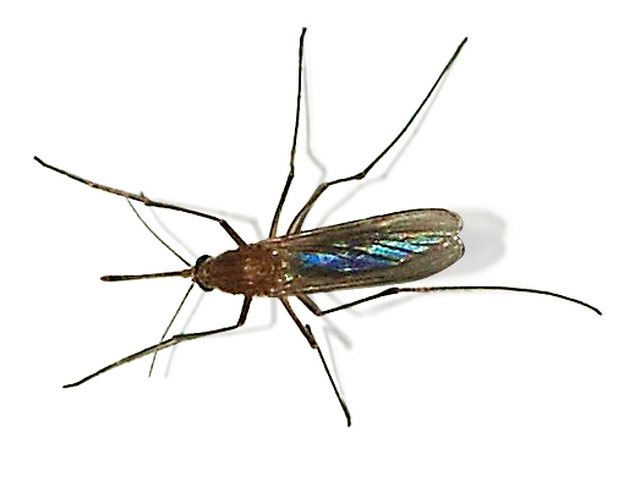
Mosquito and tick control in Battle Creek, MI is shaped by water and woods. The Kalamazoo and Battle Creek rivers meet here, and the bottomland, wetlands, ponds, and drainage that come with them give mosquitoes a productive run from late spring into fall. West Nile virus is a standing Michigan concern, and eastern equine encephalitis, a rarer but far more serious disease, has repeatedly involved southwest Michigan counties. Ticks are the other half. The blacklegged tick, which carries Lyme disease, has expanded steadily across southwestern Michigan over the past two decades, and it waits along wooded edges, tall grass, and leaf litter, exactly where a yard meets a tree line. An experienced local exterminator reduces the breeding and questing habitat and treats where the adults rest.
Where the mosquitoes come from
The rivers and wetlands set the season, but most of the mosquitoes biting you were born within a couple hundred feet of your door. Clogged gutters, planter saucers, tarps, tires, wheelbarrows, birdbaths, corrugated downspout extensions, and the low spot behind the garage all hold enough water. A week is all it takes for eggs to become biting adults.
Adults spend the day resting in cool, shaded, humid cover: under the deck, in dense shrubs and ivy, along a fence line, in tall grass. That is where a barrier treatment goes.
Ticks and the yard edge
Blacklegged ticks do not fly or jump. They climb onto low vegetation and wait, a behavior called questing, and they need humidity, which means leaf litter, tall grass, brush, and the shaded edge where a lawn meets woods. The interior of a mown, sunny lawn holds very few ticks. The tree line holds most of them.
That is why tick work is edge work: clear leaf litter, cut back brush, keep grass short, and treat the perimeter and the transition zone rather than broadcasting across an open lawn. A gravel or mulch strip between lawn and woods measurably reduces tick movement inward.
How treatment works
A property walk locates and eliminates breeding water, with larvicide where water cannot be drained, like a rain barrel or a persistent low spot. A residual barrier goes on the shaded resting areas, the undersides of leaves, dense shrubs, fence lines, and under decks and porches. Tick treatment concentrates on the wooded edge, leaf litter, and stone walls where rodent hosts travel.
Because adults keep arriving from the neighborhood and the river corridor, this works best on a recurring schedule through the season, with the barrier refreshed and breeding sites re-checked each visit.
Call and connect with an experienced local exterminator.